Social media marketing for restaurants in 2026 and beyond

Written by Natalie O'Grady
Published on July 14, 2026
Reading time 14 minutes
Table of Contents
Food content on social media catches everyone’s attention. Whether from someone’s oven at home or the skilled hands of Michelin-starred chefs, we enjoy seeing (and sampling) tasty entrees. Restaurant customers are increasingly consulting digital networks for their food adventures, with 38% of users, according to the Q2 2026 Pulse Survey, saying they prefer to search for restaurants with social over traditional search. Your restaurant’s social channels are an opportunity to entice customers’ taste buds before they even walk in the door.
A strong social media strategy can boost your venue’s revenue by an average of 10%, according to a Deloitte study. Prioritize creating appealing social content, and you’ll keep your customers coming back for another bite.
Social media marketing for restaurants should span networks and this guide shares the best practices you need to know–a blueprint to turn digital scrollers into paying guests.
Why social media is the new front door for restaurants
TikTok and Instagram have effectively replaced traditional search engines and review sites for younger audiences. According to one study, at least 74% of diners use social media to pick their next meal. Millennial and Gen Z consumers are using social media to do a “vibe check” before they commit to making a reservation. Millennials lead the pack here, making up 46% of all diners using social media to research restaurants.
A social media account now represents the “front door” of your establishment, offering a look at the people and processes behind the meal.
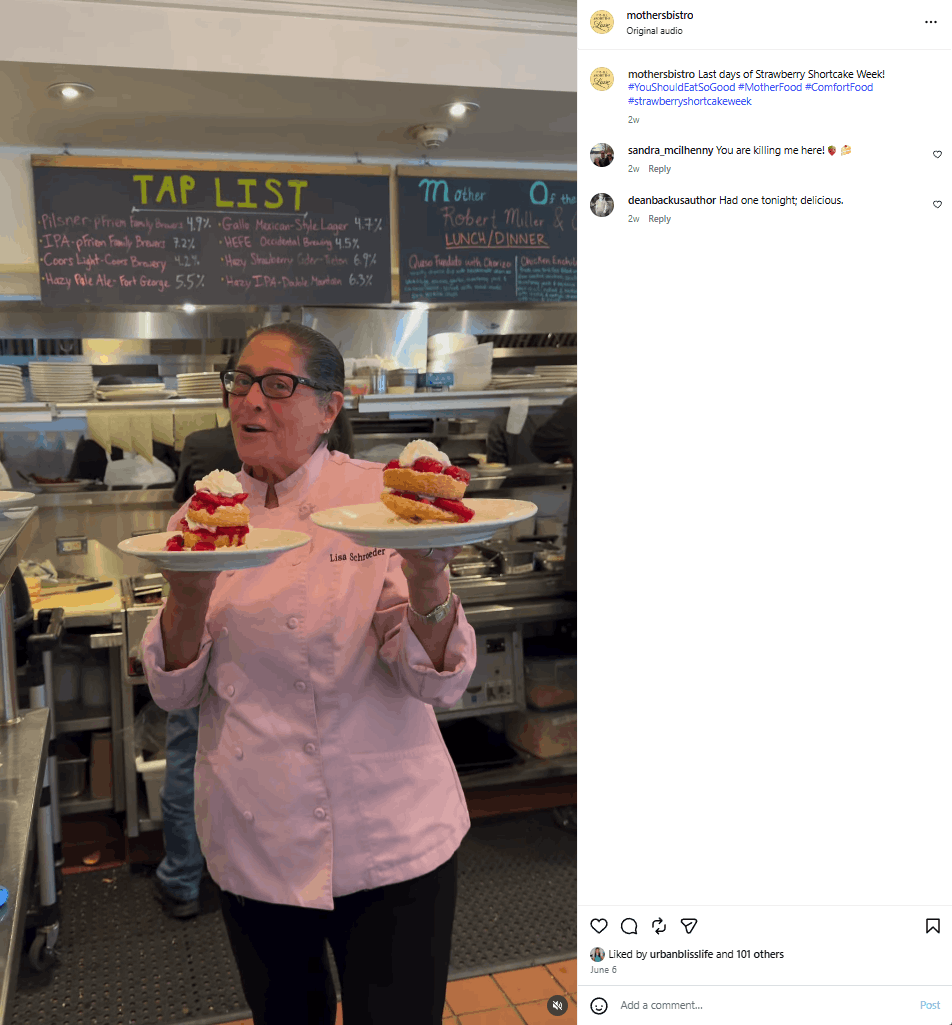
Lisa Schroeder, executive chef and owner of Mother’s Bistro & Bar in Portland, OR, uses social media to introduce diners to her menu and passion for a good, cozy meal. Her personality-driven approach shows the authentic connection that chefs, owners or other staff members can bring to social content.
Mother’s Bistro frequently features behind-the-scenes looks at the kitchen process, like Schroeder proudly holding plates of comfort food on their way to restaurant patrons, demonstrating the effort and love they put into preparing a dish.
Those videos translate to more foot traffic at Mother’s, bringing in diners eager to taste the seasonal specials they saw on social.
Your social media might be a customer’s first sample of your restaurant and food. Alignment with your virtual and physical front doors is important to create a consistent experience.
For the restaurants he works with as Principal at The Feast of Friends agency in Las Vegas, Nevada, Eric Gladstone balances the aspirational with grounded reality. “[Social] is the portal through which you will attract or repel potential guests, where you represent what you do best,” he says. “But you have to make sure not to stray too far from reality so that when they enter your actual door, the experience tracks.”
How does social media affect restaurant sales?
Strategic social media content can move customers from casual viewers to in-person diners, boosting your restaurant sales. Social acts as a visual menu of your offerings. Posting daily, craveable content shows browsing customers what they can look forward to, and friction-free booking enables them to easily take the next step.
CJ Powell, marketing manager for Mission Yogurt, Inc.’s portfolio of restaurants, says that social content sets you apart from competitors in a tight market. “You have to distinguish yourself as worth the visit,” he explains. “Almost all of our focus goes into establishing and solidifying our brand through consistent, high-quality creative content.”
Top social media networks for restaurants and bars
You don’t have to commit to every social media channel out there. Select the ones most relevant to you and your guests, and focus on creating eye-catching content that translates to filled seats.
TikTok, in particular, has impacted Mother’s Bistro’s sales according to Chef Schroeder. “Many times, people will say they came in because of our TikToks,” she says.
Your strategy should cover when to post on each channel to drive traffic; posting a drink special at 8 AM when your bar opens at 7 PM may not be useful. Keep in mind that the best times to post on social media in Australia and the best times to post in the UK may differ from the US.
Here are some social media networks to consider for your restaurant’s marketing plan.
- TikTok: Many viral trends are born on TikTok, and restaurants creating video content here will draw in younger crowds. An MGH survey found that 58% of users have visited a restaurant after seeing it on TikTok. Bite-sized looks at your menu and showcasing your staff are good starting points for content. See our best times to post on TikTok guide to help schedule your content once you’ve created it.
- Facebook: Over half of Facebook’s users are 35 and older, a great option for restaurants targeting an older demographic. In addition to sharing your appetizing photo and video content, restaurants and bars can use the Events functionality to draw attention to upcoming specials, ticketed events, seasonal parties and more. Some of the best times to post on Facebook are during the work week; post in those time slots to drive interest during normally quiet week day evenings.
- Instagram: The age groups on Instagram are similar to TikTok’s, and it specifically reaches a mix of urban and suburban users. Food content is hugely popular on Instagram, and Gen Z users rank it as one of their top two social sources for food recommendations. Reels, Stories and a built-in connection to Threads give you multiple options for sharing your content on Instagram.
- X (formerly known as Twitter): This channel skews toward a male audience, with the bulk of members in the 18 to 35 age range. X is useful for posting quick updates like flash sales, daily specials and changes to your schedule. Weekdays offer some of the best times to post on X, so tap this resource to promote lunch deals and drive evening traffic. If you have a chef, bartender or leadership team member wanting to build out more of their presence, X is a good option.
- YouTube: Across age groups, YouTube sees strong traffic: 84% of adults say they have used it, according to Pew Research. YouTube is perfect for long-form videos that can be cut into Shorts. Content on YouTube can have a longer shelf life than other social content, thanks to the search functionality. Check out our best times to post on social media article for ideas of when to upload and get an initial boost in traffic.
- Snapchat: Great for reaching younger audiences, restaurants can use Snapchat to share off-the-cuff content that feels authentic and in the moment. Less polished behind-the-scenes looks play well on this platform. Snapchat marketing is unique; Stories expire unless you choose to save them, so you’ll need to consider your posting schedule carefully.
How to market a restaurant on social media: 10 best practices
Ready to create content that’s as delectable as the food you serve? Here are 10 strategies to make sure your content is getting seen by eager diners.
1. Optimize your restaurant’s social media profile
When a potential customer comes across your posts on social media, your profile will be their next stop to find information about when and where they can order the great food you just shared. Your profile should be optimized to answer the questions they have before they need to ask them.
Draft a bio that clearly answers what you serve, where you’re located (including neighborhood if you’re in a larger city) and meal times. This also helps align your profiles with your desired search terms, across social, SEO and AI search. Next, give them somewhere to go further. Most social media profiles include a space for links so you can capture high-intent traffic and book reservations. Mastering the art of the link in bio lets you direct the customer exactly where you’d like them to be.
For networks like Facebook, the link in bio comes in the form of a button on your profile. You can connect this to menus, your main website, or a reservation platform like Opentable or Resy. Integrating direct links for reservations makes it easy for customers to book, increasing the likelihood they’ll come in. Links to place orders for pickup are also great to include here.
Some networks allow you to include multiple links or use a tool like SproutLink where you can customize the experience.
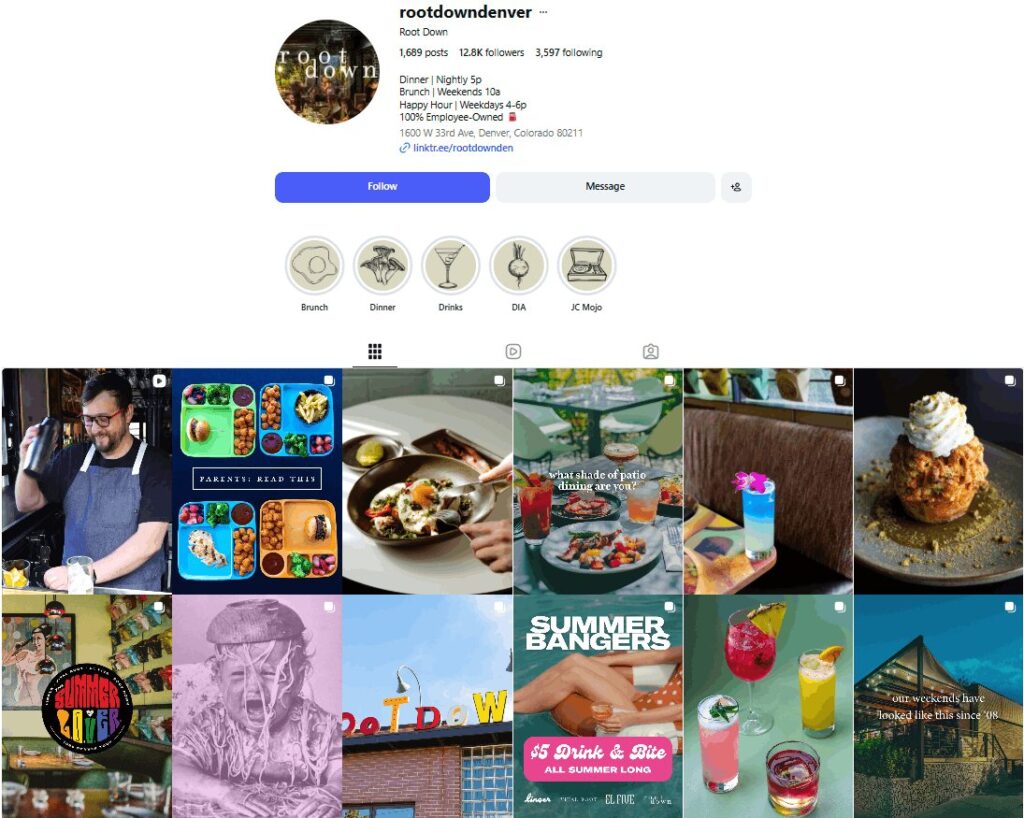
For an Instagram or TikTok link in bio, having multiple link options helps users view your menu, book or make a purchase within just a few clicks. For menus, keep in mind that most are viewing these on their phone; massive, slow-loading PDFs cause frustration. Swap these for fast, responsive mobile HTML menus to avoid losing traction with interested customers.
Lastly, use your Story “highlights” on networks like Instagram to showcase reviews, influencer visits, user-generated content (UGC) and your team. Visitors can check out this content quickly via the highlights without having to scroll your entire profile. Spotlight some of your best content here to give it a longer shelf life.
2. Be strategic with your content strategy
Your social media content strategy should build “digital storefronts” for your business.
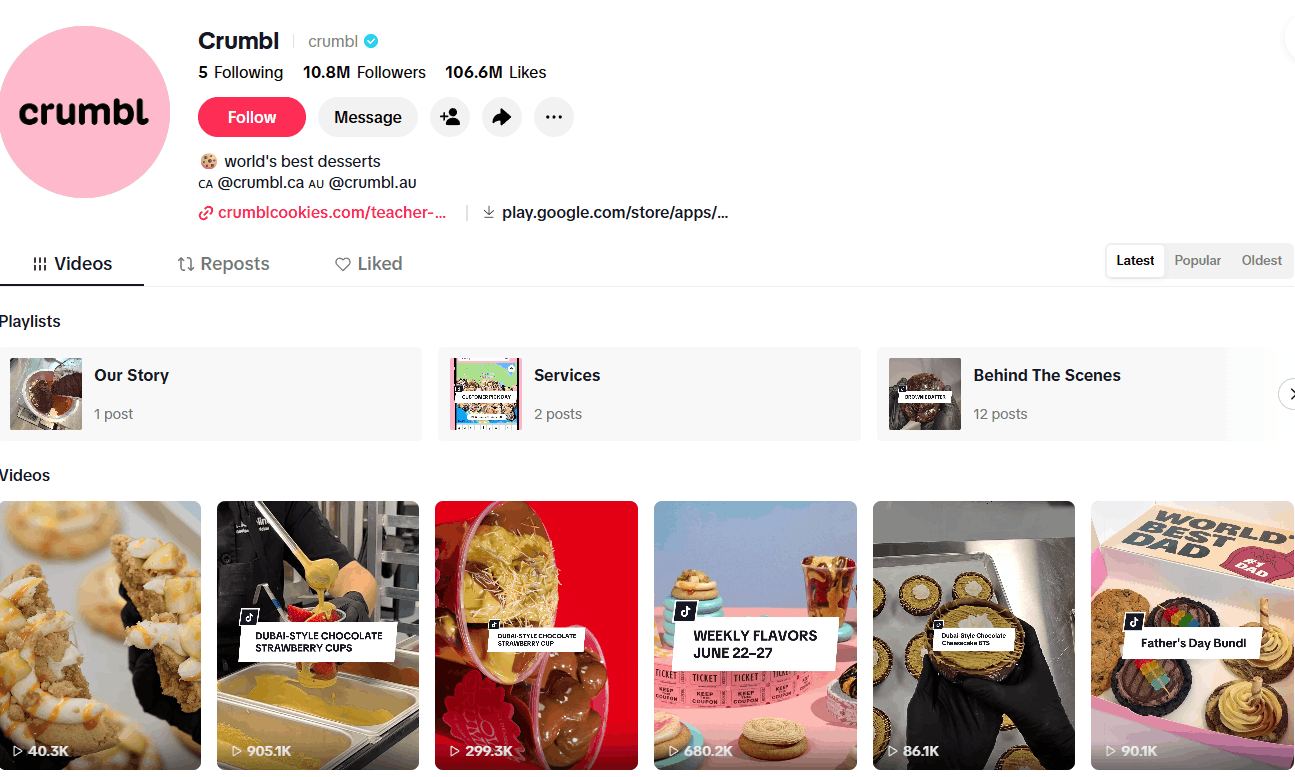
Instagram and TikTok support hyper-local discovery, helping you target your audience via hashtags, keywords and search. Even if the customer doesn’t come to your restaurant until later, they’re often “shopping” via your Instagram bio, grid and highlighted posts. These are functional menus for visitors, so be sure to include pricing, ingredients and the details of the dishes you share.
Crumbl does this on TikTok by ensuring their posts clearly name the item being shared.
Kaitie Stutz, associate social media manager at First Hospitality, says that timeliness is key to content strategy for the restaurants in her portfolio. “Keeping content fresh and tied to real activations, new menu launches, live events and seasonal moments is what consistently moves the needle and helps a restaurant stand out from a crowded feed,” she says.
Timeliness includes when you share that mouth-watering piece of content. You’ll need to balance sustainability and effectiveness in your posting schedule. Three to four times a week on your main feed/grid, supplemented by daily updates to your ephemeral content, is a solid cadence.
Whether posting to the feed or your stories, keep optimal post times in mind. For restaurants, this looks like:
- Late morning (10:00 AM – 11:30 AM) to catch the “lunch decision-making” crowd.
- Late afternoon (2:30 PM – 4:00 PM) for folks scrolling at the end of the workday and planning happy hours or dinner.
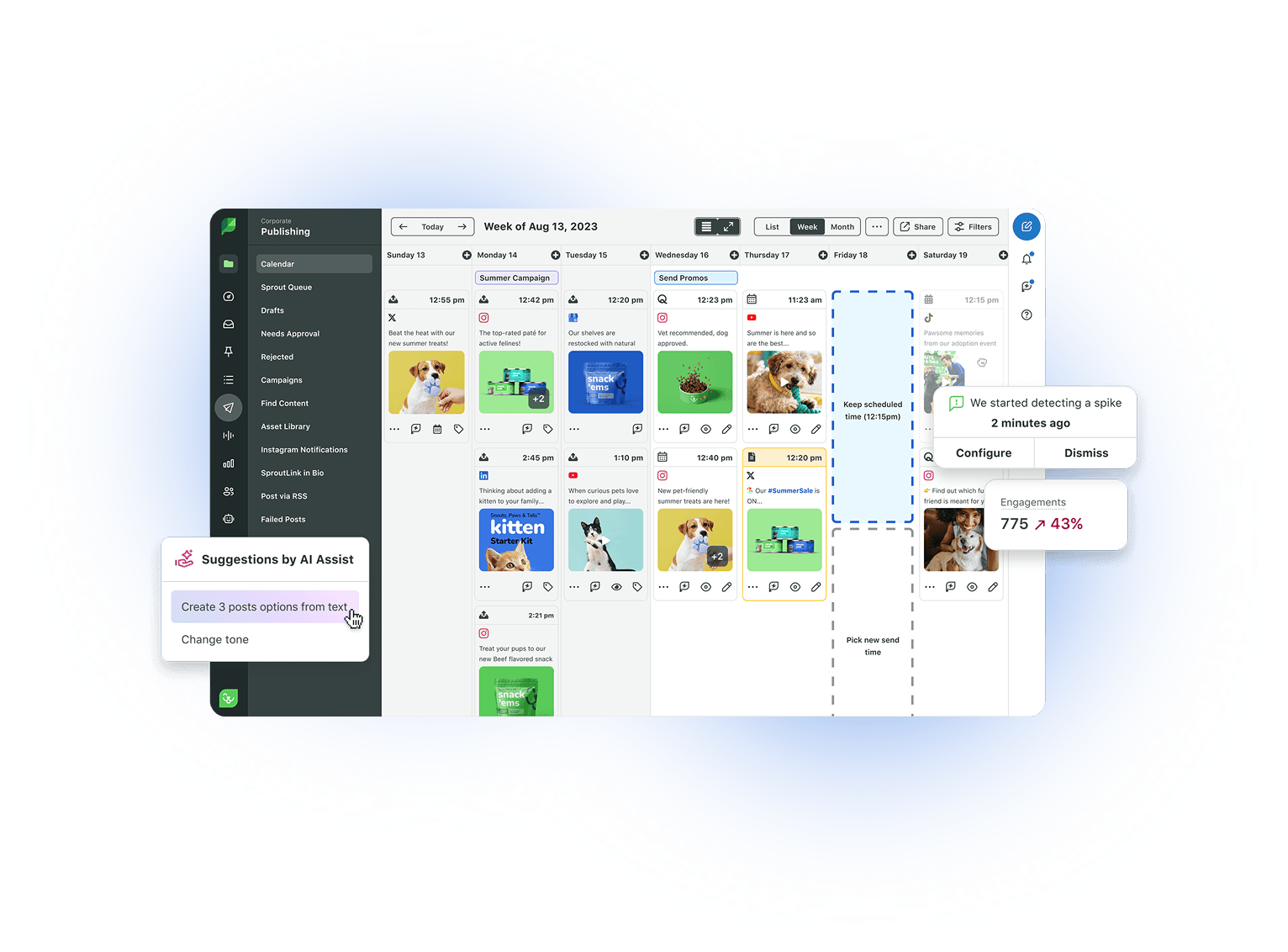
Tools like Sprout’s ViralPost technology take the guesswork out of finding specific time slots. It calculates your Optimal Send Time based on your specific audience engagement data.
Also consider social media ads to enhance your overall strategy. Instagram ads, paid Facebook promotion and TikTok ads all increase your reach to specific audiences.
Reddit advertising is another option. This popular forum features subreddits (often location-specific) where users honestly and openly discuss experiences with restaurants and bars. Reddit is also great for social listening to learn audience sentiment and respond to questions or reviews.
3. Make visuals a priority to highlight the vibe and experience
If social media is the front door to your establishment, your content should help followers feel like they’re having the same experience digitally that they will in person. Showcase your atmosphere, ambiance and energy so guests can visualize what their visit will be like.
“We want to show guests what they can look forward to when they come in,” Powell says. “Food, drinks, vibe, staff–the essentials that make a restaurant stand out.”
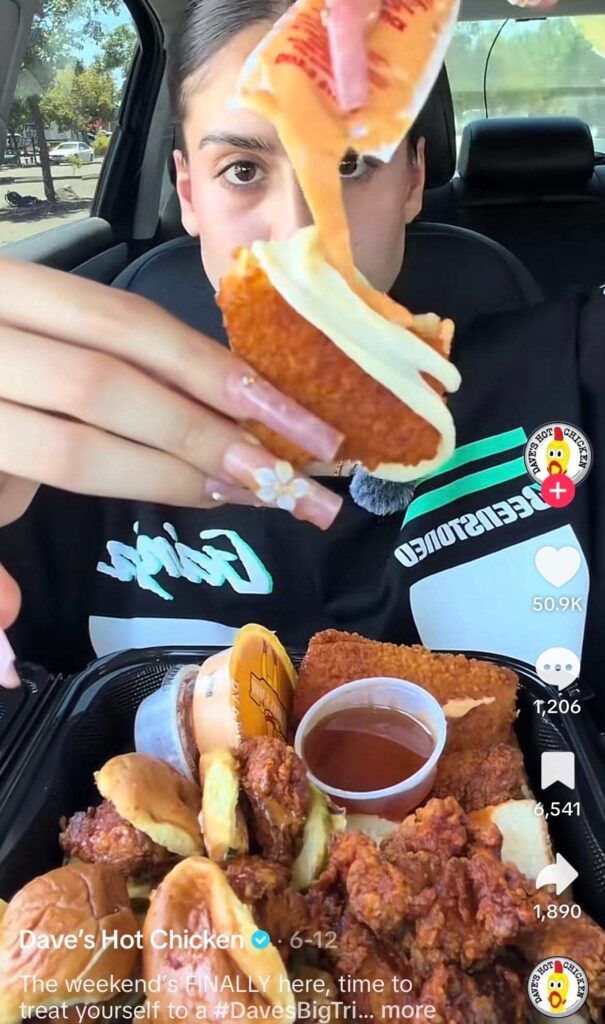
Motion and action shots bring this to life in photos and videos. When showing your menu items, give viewers the full experience with cheese pulls, drizzles of sauces, sizzling plates and freshly shaken cocktails pouring into a glass. Dave’s Hot Chicken has mastered this technique, with multiple viral videos featuring foodies sampling their chicken tenders and mozzarella sticks, showing the colors of their spices and drips of their house-made sauce.
Your static images and graphics should also match the vibe you bring to the table. Tools like Canva simplify your graphic design process, and Sprout’s Canva integration streamlines everything into one location. Move your finished designs straight from Canva into Sprout without extra downloading, leaving more time to focus on getting your next post just right.
4. Spotlight your team with behind-the-scenes and storytelling
Your diners care just as much about the people behind the food as they do the food itself. As much of the digital world reorganizes itself around generative AI and its role in content production, there’s been a noticeable shift in audiences’ desire for real, human content. They want content that resonates, and food offers plenty of opportunities for connection and storytelling.
What’s working really on social right now is straightforward, Gladstone says: “Entertainment. Storytelling that feels authentic. Relentless repetition.”
Human-generated content is important to set yourself apart as audiences push back against “AI slop.” Humanize your restaurant and venue by introducing your kitchen team, wait staff and bartenders. Share the owner’s story, and their connection to the menu. You can have fun with spotlighting team members, letting them show their authentic personalities.
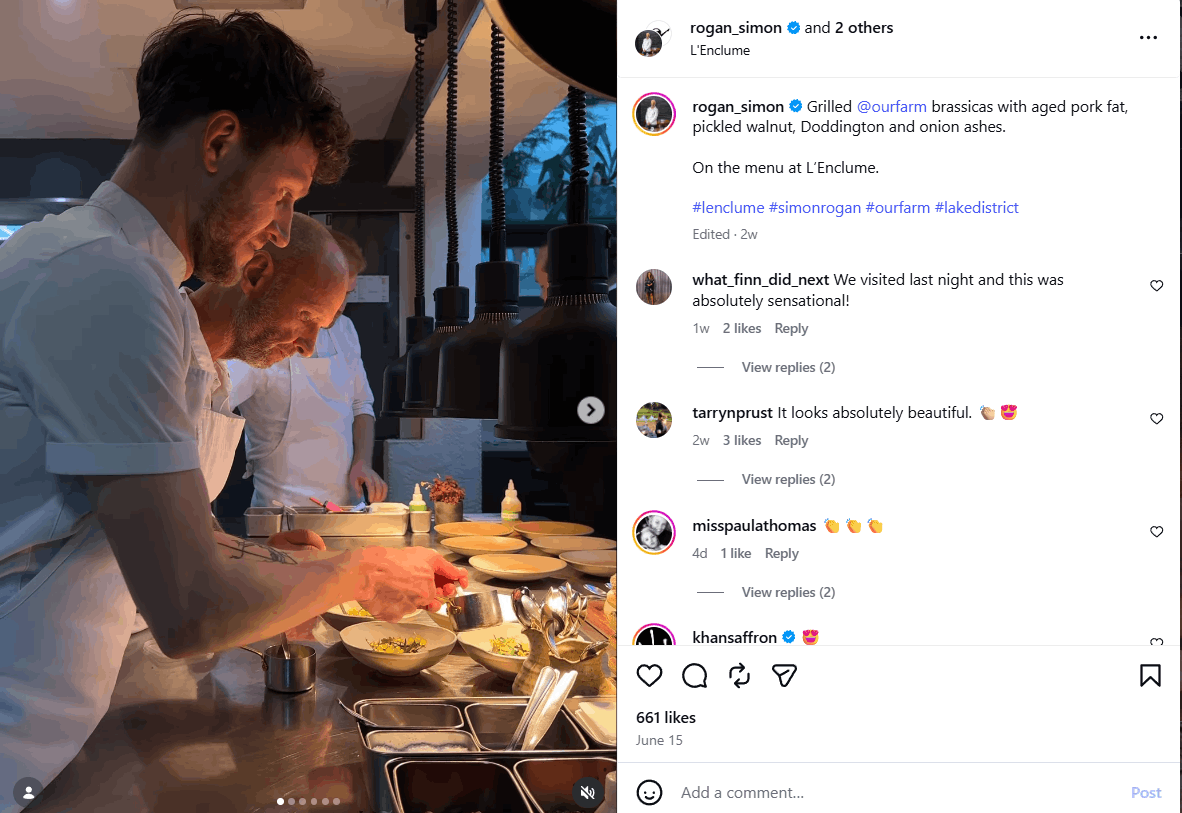
L’Enclume in Cartmel village in Furness, England centers a large portion of their social media content on their chefs and support staff. Videos show them at work carefully plating gourmet dishes and experimenting with new ingredients
5. Plan your short-form video strategy for Instagram Reels and TikTok
The brief run time of short-form videos pushes you to grab attention and resonate quickly, so authenticity is key. You don’t need a fully furnished production studio to create video that your audience can connect with.
Instagram Stories, for example, puts your restaurant at the top of your followers’ feeds. You have about three seconds to secure their attention before they click through to the next Story. A visual hook will get viewers to stop scrolling/swiping and hang around to watch the full piece (and then check out your profile).
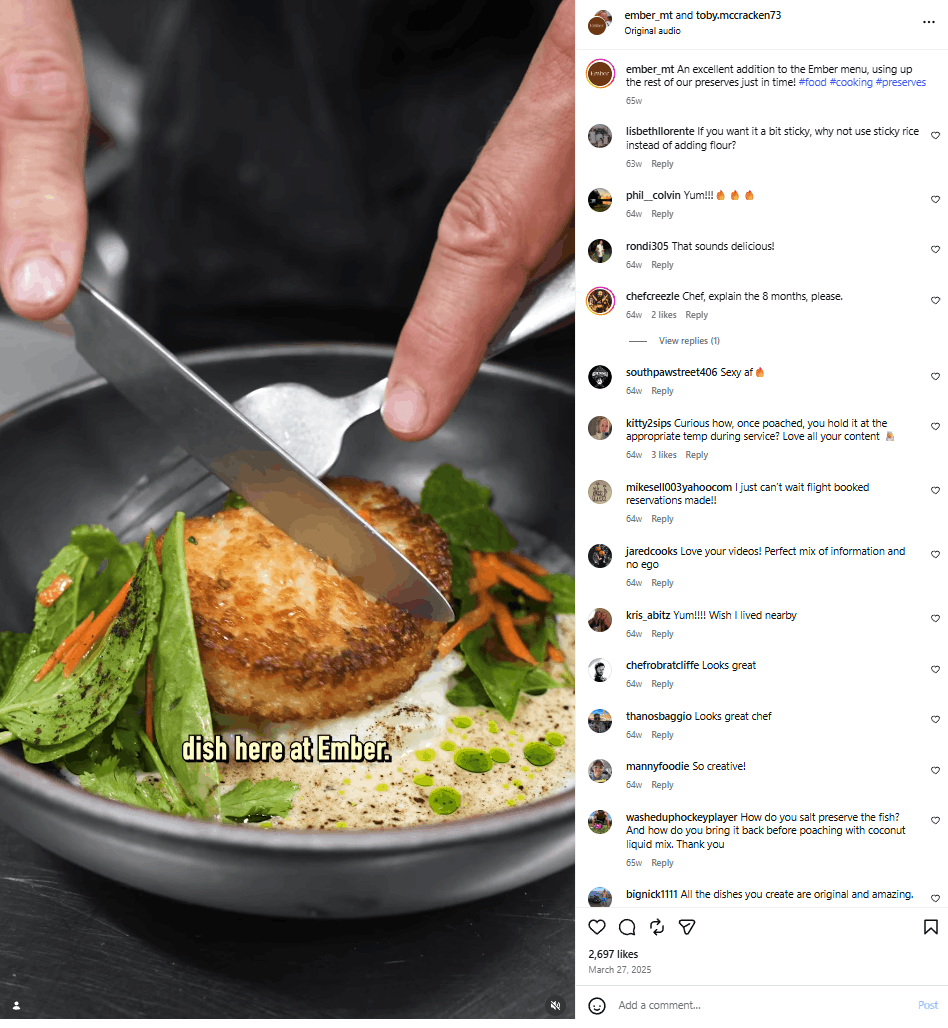
With food content, an “inverted video” strategy relies on an easy, strong visual hook: the finished food you serve to guests. Start with a look at the final, mouthwatering creation and then jump into the cooking and assembly process. Draw viewers in with bold colors and steaming food to get them interested. Ember in Hamilton, Montana features recipe videos that typically begin with a look at the gourmet final creation.
The short-form video content you create for one channel can be repurposed or re-cut for another. Make sure you know the specific social media video specs for each before you start filming to save extra work later.
6. Promote community and events
Getting local with your content strategy builds connection with your audience on social. Your restaurant is a part of the community, and diners enjoy visiting spots that represent what makes your locale special. Happy hour specials, trivia nights, live music and weekend brunch events all draw in crowds.
Promoting these events on social media has shown strong ROI for the restaurants Stutz works with. “We ran one program around a rooftop event that generated nearly 20 pieces of content, roughly 26,000 views, and 2,000 engagements, with an earned media value of just under $3,800 on a relatively modest investment,” she says.
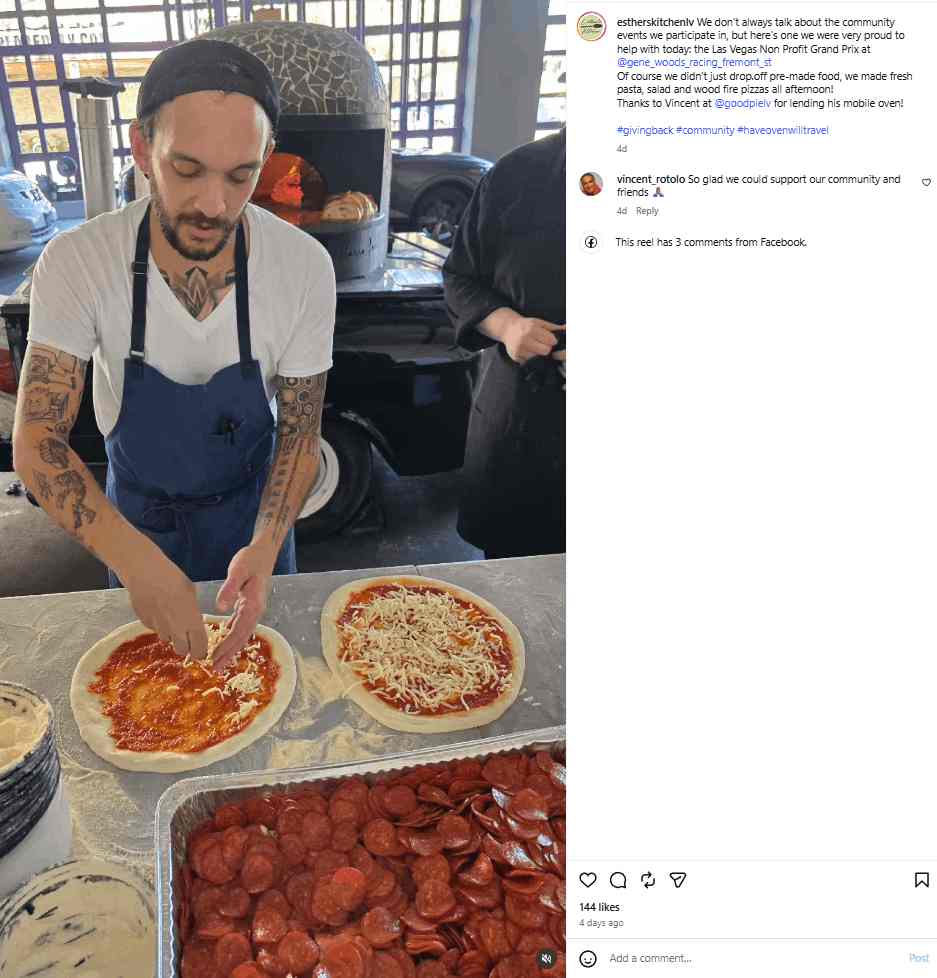
Lean on seasonal events like Restaurant Week to experiment with new event ideas to bring people in. What local ingredients can you spotlight in a one-week-only dish? Are there local charities or organizations your team can support with the food you make? Ether’s Kitchen in Las Vegas, Nevada highlighted the handmade pizza and pasta their team made on site for a nonprofit event, giving both their chefs and food a chance to shine.
7. Harness user-generated content
UGC is digital word-of-mouth. It’s the unfiltered, organic opinions and reviews your diners are sharing with their friends and family. Most people will trust a friend’s opinion over a highly polished ad, so UGC is a boon to any restaurant’s social media strategy.
Incentivize guest UGC by placing your social media handles and any branded hashtags you use on physical menus, table tents or printed receipts. Make it easy for diners to find and tag you when they share about their experience. You can also configure your venue’s wi-fi splash page to redirect to the restaurant’s Instagram or TikTok account to encourage posting. Cheesecake Factory is a popular location among social media diners; their TikTok hashtag has over 94k posts featuring real experiences and reviews.
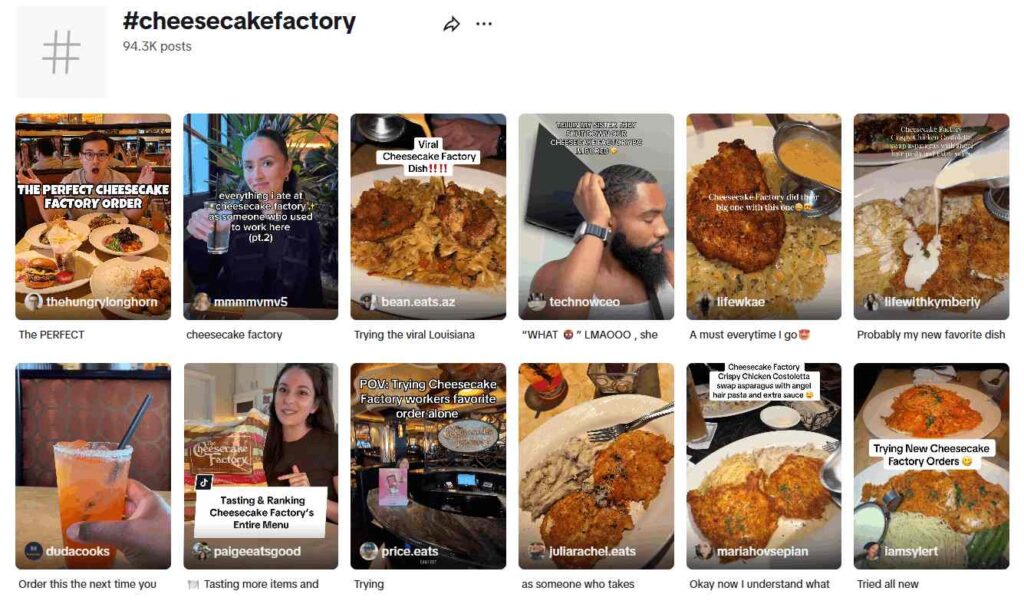
As you track UGC content about your restaurant across social media, look for ways to reshare and use the content yourself. Reach out to ask for permission to use the posts in your own feed and ads. UGC content can also inform your ongoing strategy and help you uncover details about brand sentiment you may not have found otherwise.
8. Collaborate with influencers
Influencer partnerships get you in front of new audience segments via a trusted voice. Influencer marketing offers the relatability of UGC but with the creative direction of your specific strategy. There’s an influencer for every niche and every budget.
Macro-influencers have significant followings of 100k to 1 million followers, bringing your restaurant to thousands of potential new customers at once. These influencers are a good fit for broad brand awareness campaigns or an event you need to make a one-time big splash for. Micro-influencers have around 10K to 100k followers. While their reach isn’t as broad, they’re often more connected to their following and able to respond to comments consistently. They can lend credibility to targeted campaigns.
Sam Roby, the influencer behind @chicagofoodauthority, is a macro-influencer who frequently does partnerships with restaurants and bars. One example is this post with Ghirardelli for the launch of a Dubai chocolate sundae:
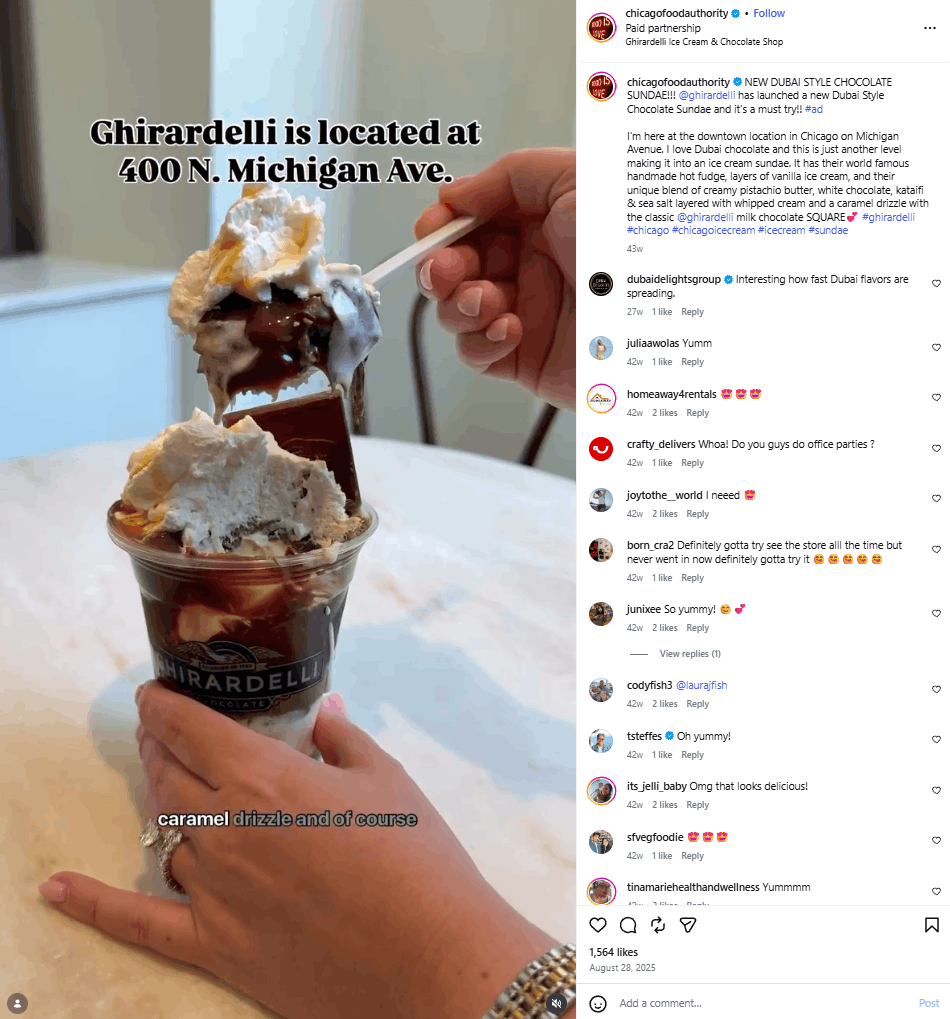
No matter what size of influencer you choose to partner with, Stutz has a piece of advice: remember, this is ultimately a vendor arrangement.
“I treat influencer partnerships like any other vendor relationship with clear deliverables, clear expectations on both sides, and a real point of contact internally so nothing falls through the cracks,” she explains. “And once we have that content, we treat it as the start, not the finish! A single influencer video/picture or UGC clip gets repurposed across organic, paid and beyond, so restaurants get a lot more mileage out of every dollar spent on content creation.”
When developing your influencer strategy, Sprout Social Influencer Marketing enables you to identify quality content partners without hours of scrolling and manual research. Find brand-safe creators who fit your restaurant’s aesthetic and budget with the platform’s built-in AI-powered Brand Fit Score that matches you with influencers who already align with your brand and audience. Plus, build a branded application page to capture inbound creator interest and funnel them into lists for easy vetting using the platform’s Recruit feature.
9. Analyze your social media strategy to pivot when needed
As you roll out your restaurant social media strategy, analyze your content’s performance and learn as you go. Review your social media analytics to track crucial KPIs and assess the success of your efforts. Be prepared to pivot when needed; a strong strategy is adaptable. World events might call for a shift in posting themes, or an unexpected opportunity with a big influencer might change your planned schedule.
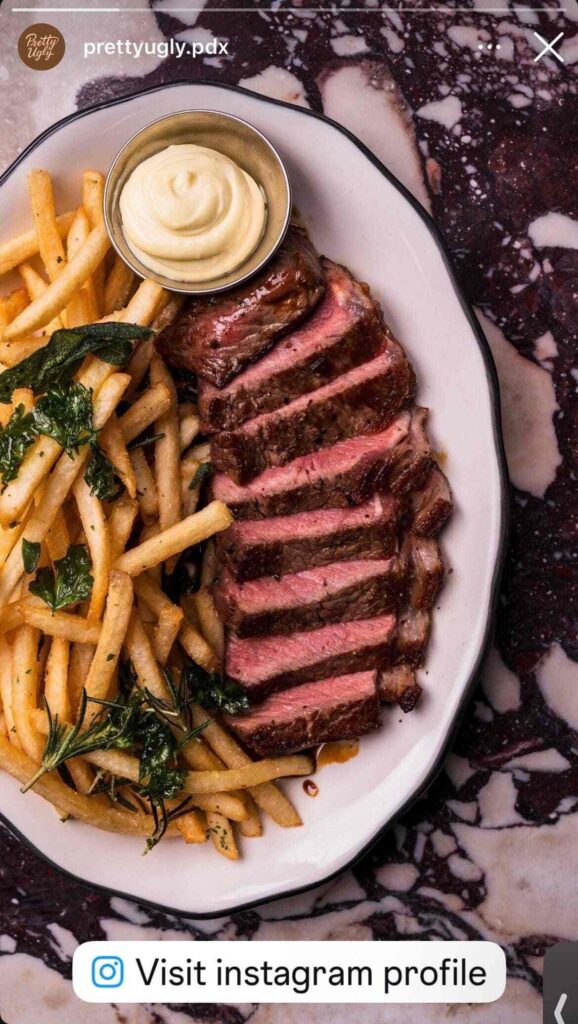
Your social media approach might include both organic and paid strategies. Paid ads (including your paid influencer partnerships) are useful for promoting specific events and items, increasing your followers and raising brand awareness. You can also rework your strongest organic content into a paid package like Pretty Ugly in Portland, Oregon did.
10. Prioritize social customer care
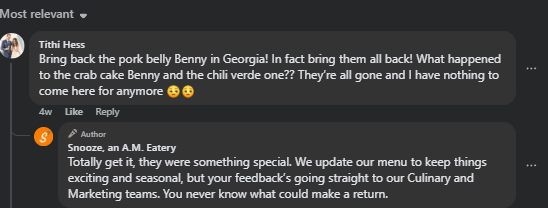
Your customers aren’t just researching your restaurant via your social channels, they’re also hoping to connect with you and get questions answered. Social media customer care is a driver of brand loyalty and gives you the chance to correct issues or surprise and delight customers.
The process begins with social monitoring, a practice where you sort through social media chatter to identify who is talking about your restaurant and what they’re saying. This includes comments and messages on your pages as well as posts mentioning you but not tagging your account. Responding to inquiries and concerns as soon as possible helps customers feel cared for and eager to come back to your restaurant.
Sprout Social has features to help you manage and excel at social customer care. The Smart Inbox helps you sort messages and prioritize responses. It’s flexible for teams of all sizes, and keeps you informed with conversation history for specific contacts. Spike Alerts let you know when your incoming messages are exceeding a set hourly average, alerting you that a real time issue may be happening. You can also unify your review site management with Sprout, centralizing your full customer care approach.
Serve up fresh social media management for restaurants in 2026
Restaurants and bars have an advantage on social media: engaging, delicious content is right inside your kitchen. Perfectly baked bread, juicy steaks and salads piled high with toppings all evoke visceral reactions in viewers and drive traffic to your venue.
With the right strategy, you’ll be serving new customers who discovered your content specifically on social media. To get started crafting tasty content, learn more about social media management in our guide.
Frequently Asked Questions
What is user-generated content for restaurants?
User-generated content (UGC) is unpaid, unsponsored content from real diners and visitors to your restaurant. It’s the social media version of word-of-mouth where users share content about their real experiences at restaurants and bars. It’s priceless for credibility; these are authentic opinions that you didn’t pay for. A positive UGC review can boost your reputation.
Which social media platform is best for restaurants and bars?
Instagram and TikTok are top social media network choices for restaurants and bars. The focus on video content and local search functionality supports a targeted content strategy. Facebook is another strong pick, with event promotion options and a wide range of audiences to tap.
How often should a restaurant post on social media?
Three to four times a week on the main feed is recommended. For platforms that have ephemeral content features, you can share daily updates and give a permanent spot to top content in the highlights space.
What is the best time of day for a restaurant to post?
Late morning (10:00 AM – 11:30 AM) to catch the “lunch decision making” crowd. Late afternoon (2:30 PM – 4:00 PM) for folks scrolling at the end of the work day and planning happy hours or dinner.
How can I get customers to tag our restaurant on social media?
First and foremost, make it easy to do so! Incentivize guest UGC by placing your social media handles and any branded hashtags you use on physical menus, table tents or printed receipts. Make it easy for diners to find and tag you when they share about their experience. You can also configure your venue’s wi-fi splash page to redirect to the restaurant’s Instagram or TikTok account to encourage posting.




Share